Tuesday, September 29, 2026
Home Blog

Ty Fforest Resource Hub – Under attack

0

Setting the Record Straight: Truth, Integrity, and 20 Years of Community Care

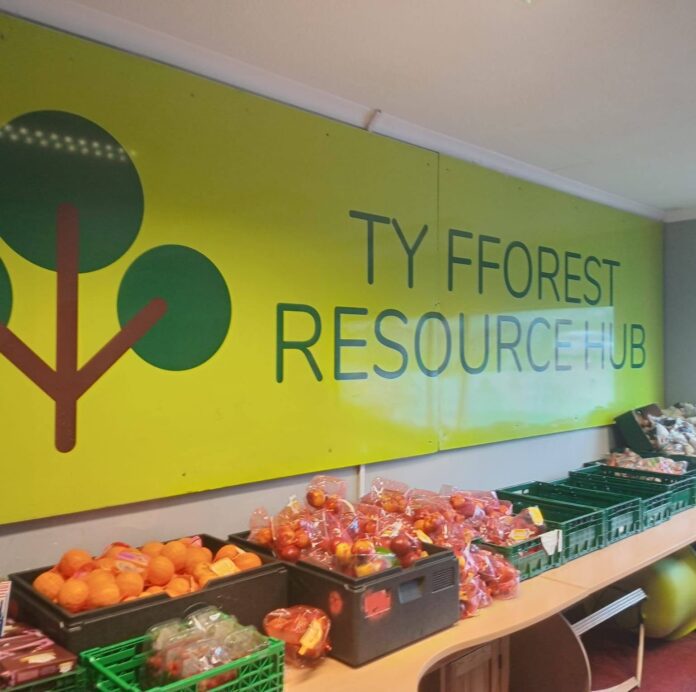
For over two decades, Shani Stephens—founder and director of the Ty Fforest Resource Hub in Swansea—has dedicated her life to supporting vulnerable individuals and families. What started as grassroots community outreach has grown into a multi faceted lifeline offering vital services, including:

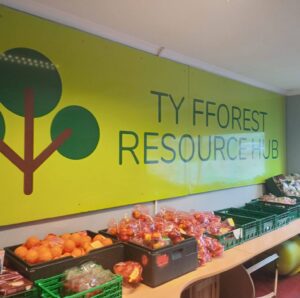
  • Community Food Shares and Emergency Food Bank Support

  • Late-Night Homeless Hot Food Outreach

  • Dedicated Veteran Support

  • Digital Media Support: Developing dedicated news platforms, regional support apps, and tools for missing people and pets (Network Wales).  We also offer free hosting to other CICs, non profits, charities and grassroots groups saving them money on the cost of a website host (www.host.wales)

This work isn’t just a day job; it is a round-the-clock commitment. Members of our team have personally accompanied Shani at ungodly hours to deliver emergency food parcels to homebound residents, or to serve hot meals to those sleeping rough in the dead of night.

Despite 20 years of relentless community service, over 40 dedicated volunteers, and thousands of lives touched, Tŷ Fforest is currently facing a targeted social media campaign aimed at smearing the Hub, its founder, and our volunteers.

We categorically refute every one of these malicious and false claims. Here are the facts.

Myth 1: “Volunteers Take the Best Food for Themselves”

The Truth: Our operational process is entirely transparent and visible to the public.

On busy days, local residents often begin queuing outside the hub around 8:00 PM for our 9:30 PM opening. From the front foyer and through our large glass windows, anyone standing in line can clearly see delivery drivers arriving at the rear, unloading crates, bringing them directly inside, and sorting the produce straight onto the shelves for the public. Nothing is hidden, hoardings do not exist, and the public always gets first and full access to everything received.

Myth 2: “Food is Redirected to the Director’s Pub”

The Truth: This accusation betrays a complete lack of understanding of commercial food safety standards.

Operating a licensed business like a pub requires strict compliance with food safety regulations. Every item stored, prepared, or served in a commercial kitchen must have full batch traceability, clear invoice documentation, and valid use-by dates. Storing untraceable or outdated surplus food at a commercial venue would result in severe regulatory penalties and immediate closure by environmental health inspectors. No donated surplus food ever goes to any commercial enterprise.

Myth 3: “The Director Takes Cash Donations for Personal Use”

The Truth: Financial handling at the Hub is strictly controlled and delegated.

Shani is rarely on-site during daily food share collections due to managing wider operations and outreach. All cash contributions and donations made at the Hub are handled, counted, and banked directly by two designated volunteers out of our team of over 40. The director does not manage or pocket cash from the premises.

40 Volunteers. 20 Years of Service. Zero Room for Falsehoods.

It is disheartening to see a team of over 40 unpaid volunteers—who give up their evenings, weekends, and energy to feed their neighbours—subjected to baseless rumors.

If you’re reading this from outside the Swanssea area and you’re unaware of Ty Fforest, whilst you’re unable to see the food and support services provided, you can see our digital platform of national and local news and community websites such as www.newsonwales.com  www.pembrokeshire.press or www.swanseabay.co.uk
There are other websites and apps for Wales such as www.missing.wales, www.events.wales, www.petition.wales,  www.rugby.wales  some are already online, some are being developed.  None of these websites nor apps have adverts, they are all funded by Ty Fforest CIC. Not only is Ty Fforest serving Swansea and surrounding areas, it is also developing and servicing the whole of Wales with multiple interlinked websites and apps, none of which will have any adverts or clickbait.

What we are doing about the attacks?
We have a solicitor dealing with defamation and police for harassment. We will continue doing what we do, food bank, foodshare, veteran support, homeless hot food provisions, crisis team and a new network for wales, see www.network.wales

While online critics attempt to tear down community trust from behind a keyboard, the Ty Fforest Resource Hub will continue doing what it has always done: putting food on tables, supporting those in crisis, and building a stronger, more compassionate Swansea.

When critics attempt to “expose” grassroots community projects like Ty Fforest Resource Hub, they often rely on sensationalised headlines and sensationalist claims to stir up outrage. They view an open-door, non judgmental community hub through the lens of suspicion, trying to frame compassion as a flaw or mutual aid as a scam.

If anyone wants to put Tŷ Fforest under the spotlight, we welcome it. But let’s look at the actual facts behind the claims—and address directly what these so-called “exposés” keep getting wrong.

1. “They Don’t Ask for Proof of Need” — Correct, and Here is Why.

The primary accusation aimed at open access food shares is that anyone can walk in and take items without proving they are in poverty. Critics call this a “loophole.” We call it basic human dignity.

  • Dignity over bureaucracy: Statutory referrals require people to parade their financial struggles before a caseworker just to eat. That process is degrading, slow, and leaves families stranded while waiting for paperwork to clear.

  • Catching those in the gaps: The cost-of-living crisis hits working families, carers, and pensioners who fall just above the benefits threshold. They don’t qualify for traditional referral food bank vouchers, yet they are skipping meals.

  • Self-regulation: The vast majority of people take only what they need. Trusting our neighbours builds strong, resilient communities; gatekeeping food builds isolation.

2. “People Drive Up in Nice Cars” — The Misconception of Hidden Poverty

A favorite tactic of online critics is capturing photos of vehicles outside community centers and asserting that the occupants do not “look poor enough” to receive help.

  • Poverty is not a caricature: A car is often a lifeline needed to get to work, care for elderly relatives, or drop children at school. Having a vehicle does not mean someone can afford a £100 weekly grocery bill during a spike in energy and housing costs.

  • Volunteers and donors: People arriving at the hub are frequently dropping off donations, picking up food for housebound neighbors, or delivering items to local vulnerable groups. Judging someone’s hardship from a car window is cynical and lazy.

3. “They Are Giving Away Commercial Surplus” — That’s the Entire Point.

Critics often try to “expose” the fact that our shelves hold high-end or brand-name items sourced from supermarket surplus. They ask why people who aren’t paying full price should get access to quality food.

  • Stopping food waste: Thousands of tonnes of perfectly edible, high-quality produce are sent to landfills every week. Every crate of fresh food handed out at 485 Llangyfelach Road is a crate saved from rotting in a dump.

  • A shared environmental mission: Food rescue isn’t just relief work—it is environmental action. Anyone participating in a food share is actively keeping edible food in the human supply chain.

4. “It’s an Unregulated Operation” — Transparency and Local Accountability

Independent, community-led outreach is often accused of operating “in the shadows” simply because it isn’t a massive corporate charity.

The Tŷ Fforest Resource Hub operates in plain sight at 485 Llangyfelach Road, Brynhyfryd. Our doors are open to the public, our team is made up of local residents and carers, and our support comes directly from community members and surplus food networks. We answer to the people we serve every single day.

The Real Exposure

If the “exposed” narratives prove anything, it isn’t that Ty Fforest has something to hide—it’s that our social safety nets are fundamentally broken.

When community hubs have to step in to make sure families, carers, and vulnerable individuals can eat without shame, the failure isn’t with the hub. The failure lies in a system that allows food to rot in bins while neighbours struggle to afford dinner.

We will continue to keep our doors open, share food freely, and support Swansea without judgment.
The poisonous legacy hidden in Welsh earth

0

‘Our Land Is Leaking’: Michael Sheen’s Damning BBC Documentary Uncovers the Poisonous Legacy Hidden in the Welsh Earth

Decades after industrial giants buried hundreds of thousands of tonnes of carcinogenic ‘forever chemicals’ across Wales, actor Michael Sheen and top forensic scientists have exposed a cover-up that hits horrifyingly close to home—revealing that the toxic threat is far from history.

In the lush, rolling hills of South Wales, where livestock graze and children play, a lethal secret lies buried.

It is a story of corporate greed, political complicity, and decades of systemic denial. But following the broadcast of the explosive two-part BBC investigation Buried with Michael Sheen, the true, terrifying scale of Wales’s toxic legacy can no longer be swept under the rug.

Fronted by the Port Talbot-born Hollywood actor, the groundbreaking documentary picks up the mantle of environmental campaigner and whistleblower Douglas Gowan. Before his death in 2018, Gowan recorded his final testimony with Sheen, desperate to warn the public that dangerous chemicals dumped in quarry sites half a century ago were still actively poisoning the Welsh soil and water table.

What Sheen and a team of forensic scientists uncovered over the course of their investigation has sent shockwaves through our nation—and directly into the homes of ordinary Welsh families.

The Newport Factory and the Toxic Miracle

At the heart of the scandal lies Monsanto, the American chemical conglomerate whose plant in Newport, South Wales, manufactured roughly one-third of the world’s supply of Polychlorinated Biphenyls (PCBs) between the 1940s and late 1970s.

Marketed as industrial “miracle compounds” for their flame-retardant and insulating qualities, PCBs are now universally recognized as Group 1 carcinogens and non-biodegradable “forever chemicals.” They do not break down in nature; instead, they bioaccumulate in animal tissue, human organs, and food chains, causing cancers, immune disorders, and severe birth defects.

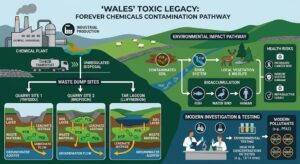
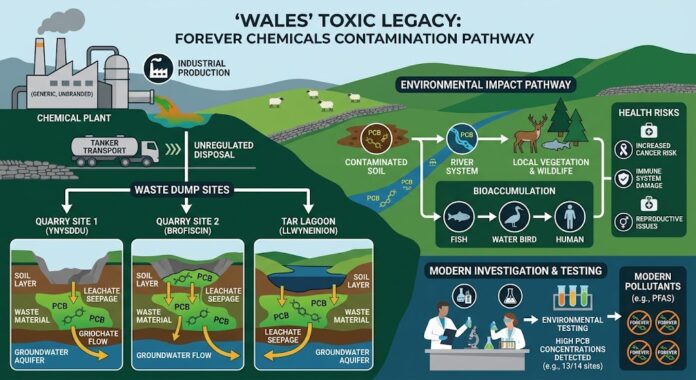
               HOW "FOREVER CHEMICALS" (PCBs) TRAVERSE WALES

       [ Monsanto Plant, Newport ]  ──► Industrial Production (1940s-1970s)
                                                 │
                                                 ▼
             [ Night Tankers ] ──────► Unregulated Dumping
                                                 │
      ┌──────────────────────────────────────────┴──────────────────────────────────────────┐
      ▼                                          ▼                                          ▼
 [Ty Llwyd Quarry]                        [Brofiscin Quarry]                   [Llwyneinion Acid Lagoon]
  (Ynysddu, Caerphilly)                 (Groesfaen, RCT)                           (Rhosllanerchrugog, Wrexham)
      │                                          │                                          │
      ▼                                          ▼                                          ▼
 Toxic Leachate Seeps                  Infiltration of Deep                  Over 90,000 Tonnes
 Into Rivers & Soil                   Groundwater Reserves                  Acid Sludge Leaching
      │                                          │                                          │
      └──────────────────────────────────────────┼──────────────────────────────────────────┘
                                                 ▼
                             [ Modern Testing: 13 of 14 Sites Active ]
                                                 │
                                                 ▼
                            [ Widespread Human & Animal Contamination ]

When Monsanto’s operations in Anniston, Alabama, faced lawsuits over severe public health crises, internal corporate memos uncovered by journalists Dan Ashby and Lucy Taylor show the company knew as early as the mid-20th century how deadly PCBs were.

Yet, while production stalled in North America, imports and manufacturing surged in South Wales. By-products and toxic sludge were routinely tankered off in the dead of night, dumped untreated into unlined quarries, fields, and pits across South and North Wales.

“A Chemical Cocktail”: The Scientific Evidence

Working alongside Dr Dave Megson, a reader in environmental forensics at Manchester Metropolitan University, the documentary team conducted independent testing across suspect sites.

The results were damning:

  • 13 of 14 Sites Leaking: Environmental testing revealed elevated, dangerous levels of PCBs escaping from almost every location tested.

  • Shocking Concentrations: In woodland surrounding the Ty Llwyd quarry above Ynysddu, soil samples showed PCB levels up to 140 times higher than average, with toxic “leachate” liquid actively seeping through fences into public walking areas.

  • Contaminated Food Chains: Earlier testing carried out for the project found banned PCBs in shop-bought fish at levels so high they breached official health advice—and, in one case, broke UK safety laws.

“What our data shows is those sites are leaking and those sites are a chemical cocktail… Some of these readings were pretty much the highest I’ve ever seen in anything we’ve tested. The country is in a really dire place.”

— Dr Dave Megson, Environmental Scientist

For Sheen, the investigation turned terrifyingly personal. When he agreed to have his own blood tested as a baseline control subject, laboratory tests revealed he carried detectable levels of toxic “forever chemicals” in his bloodstream.

Human Cost in the Valleys

Across the communities featured in Buried, residents recalled decades of strange industrial practices. In Ynysddu, elders remembered lorries dumping black, jelly-like sludge into local quarries that spilled out onto public roads. Today, families report unusually high clusters of cancer, while dog owners recount pet after pet dying from rare pancreatic diseases after walking in nearby woods.

Farther north at the Llwyneinion Acid Tar Lagoon near Wrexham, over 93,000 tonnes of chemical waste—including barrels suspected to originate from Monsanto—sit behind flimsy security fences. Despite 18 separate state investigations since 1979, the site remains un-remediated, posing a continuous threat to local water tables.

“They Wouldn’t Be Able to Fight Back”

Throughout the documentary, a dark thematic thread emerges: working-class communities were deliberately targeted as sacrifice zones. When Sheen traveled to Alabama to speak with US attorney Donald Stewart—who successfully sued Monsanto on behalf of local residents—the veteran lawyer broke down in tears when asking why industrial magnates chose these regions:

“If you look at this area, they’re working people… They wouldn’t be able to fight back.”

In Westminster, historic parliamentary records show that rather than investigating Douglas Gowan’s warnings in the 1970s, government ministers attacked his credibility from the dispatch box to shield lucrative chemical manufacturing.

The Political Reckoning: What Happens Now?

In the days since Buried with Michael Sheen aired, thousands of former industrial areas across Wales have come under scrutiny.

  • Calls for Health Studies: Local politicians, environmental organizations like Friends of the Earth Cymru, and the Royal Society of Chemistry are demanding an immediate, comprehensive epidemiological health survey of communities living near historic dump sites.

  • Enforcing ‘Polluter Pays’: Campaigners are calling on both the Welsh Government and Westminster to institute a legally binding “polluter pays” model. Currently, corporate entities avoid liabilities while local councils—strapped for cash—claim sites “do not meet the statutory definition of contaminated land” due to restrictive testing criteria.

  • Regulating PFAS: The Royal Society of Chemistry is leveraging the film’s momentum to push for new, strict drinking water standards for modern PFAS chemicals, warning that history is repeating itself.

Wales was once the powerhouse of the Industrial Revolution, but its people are still paying the price in blood, soil, and water. As Michael Sheen’s crusade makes clear: the truth can no longer stay buried.

Towns in Wales you are not supposed to stay in, but choose to

0

Small Places, Big Lives

The Welsh towns you’re not supposed to stay in — but are choosing to.

For decades, the story has been familiar: if you want opportunity, you leave. Small Welsh towns were cast as places to escape rather than places to build a future. But quietly, that narrative is shifting.

Across Wales, people are choosing to stay—or to return—and are crafting rich, creative, connected lives on their own terms. This isn’t about nostalgia. It’s about ambition that looks different.

“What if staying isn’t standing still? What if it’s a deliberate choice to build something slower, deeper, and more rooted?”

Lives Built Locally: Four Snapshots

Ceredigion

The Creative Engine: Balancing global freelance work with local community projects and a vibrant Welsh-language life. weaving work into the landscape.

The Valleys

The Support Network: Families returning for the “Grandparent Economy.” Trading long commutes for Sunday lunches and deep roots.

North-East Wales

The Hybrid Hub: Choosing small-town character over the nearby city. Building high-level careers without leaving the hills behind.

Pembrokeshire

Beyond the Postcard: Locals opening co-working spaces in old chapels, ensuring towns remain “lived-in” rather than just “looked-at.”

What Staying Really Takes

Staying isn’t effortless; it is an act of resistance. Transport can be patchy, and the 20mph limits have sparked debates about how we move between our small places. Housing pressures are real, but choosing a small place often means creating opportunities rather than just finding them.

The Upsides No One Talks About

  • 🌿 Nature as everyday life, not an escape.
  • 🤝 Friendships that span generations.
  • 🏛️ Space to start things — cafés, choirs, and collectives.
  • 📍 A feeling of being needed, not just anonymous.

A Different Measure of Success

In small Welsh places, success isn’t always louder or faster. It looks like time, contribution, creativity, and belonging. These towns may never trend — but for many, they’re exactly where a good life is being built.

Did you stay or return to Wales? We want to hear your story. Email us at [email protected]

Swansea Flooding News

0


Swansea Flood Recovery News


Swansea After the Storm

Flood recovery, community resilience, and what residents need to know next

Flood Impact & Road Updates

Recent flooding has affected roads across Swansea, including the Cwmbwrla roundabout. Local authorities continue clearing affected areas and advising residents on safe travel routes.

Check Swansea Council’s website for live road updates and safety information.

Voices From the Community

Family Home Flooded

The Evans family faced weeks of disruption after their basement flooded, highlighting the challenges many local households are currently navigating.

Small Business Impact

Local shop owners report temporary closures and inventory loss, underlining the economic effect of repeated severe weather events.

Council & Emergency Response

Swansea Council, Dŵr Cymru Welsh Water, and emergency services are actively addressing flood damage. Safety tips include avoiding flooded areas and checking local advisories.

View Council Updates

Practical Tips for Residents

Looking Ahead

Community resilience and infrastructure improvements are key to Swansea’s long-term adaptation. Residents and authorities are working together to ensure a safer, more prepared city for future storms.


Storms are injuring seals

0

Stormy Seas Lead to Surge in Orphaned Seal Pups in Pembrokeshire

Local wildlife rescue volunteers overwhelmed after extreme weather impacts marine life

Pembrokeshire Wildlife Rescue Centre has reported a significant increase in orphaned and injured seal pups following recent months of stormy weather along the county’s coastline.

Volunteers say that while casualty seal admissions are usually steady throughout summer, this season has seen an unusually high number of pups separated from their mothers — many found alone on beaches between Tenby and St. Davids.

“We’ve taken in dozens more pups than normal,” said a spokesperson for the centre. “Storm surges have swept them away, and with sea temperatures still high, many mums are struggling to return to safe haul‑out spots.”

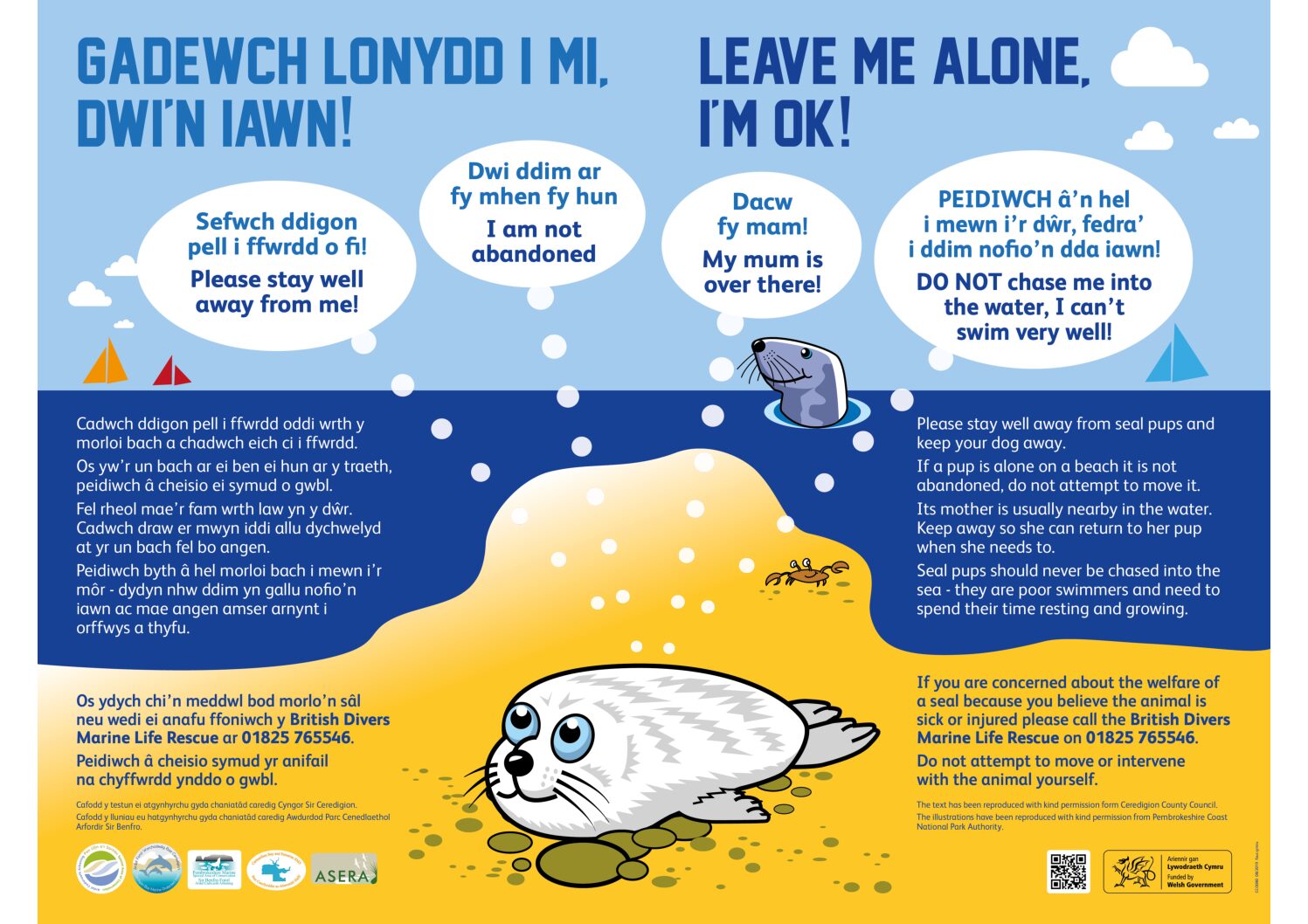
The charity is urging anyone walking coastal paths or beaches to report sightings of lone or distressed seal pups to their hotline and to avoid approaching or touching animals themselves.

Local volunteers have been working around the clock, and the centre has launched an emergency appeal for:

  • Bedding and heat pads
  • Fish supplies
  • Fuel vouchers for transport
  • Volunteer helpers

Marine biologists note that seal populations in West Wales are generally healthy, but stress the importance of human awareness and intervention when weather events disrupt natural behaviours.

Seal Pup Safety Tips

  • Do not touch or feed seal pups
  • Observe from a safe distance
  • Report sightings to the wildlife rescue hotline
  • Keep dogs and children away from stranded pups
  • Follow local beach signage and guidance

Source: Pembrokeshire Wildlife Rescue Centre / Local Reports

Welsh Marine Life Rescue – www.wmlr.co.uk

The quaint charm of Llanfairpwllgwyngyllgogerychwyrndrobwyllllantysiliogogogoch

0

Llanfairpwllgwyngyllgogerychwyrndrobwllllantysiliogogogoch Cymru

0
Llanfairpwllgwyngyllgogerychwyrndrobwllllantysiliogogogoch station sign

The Village with a Very Long Name: Llanfairpwllgwyngyllgogerychwyrndrobwllllantysiliogogogoch

A modern exploration of one of the world’s most famously long place names, its origins, culture, and why it continues to fascinate travellers from around the world.

Introduction
Hidden on the Welsh island of Anglesey lies the village known for the longest place name in Europe:
Llanfairpwllgwyngyllgogerychwyrndrobwllllantysiliogogogoch.
Locals simply call it “Llanfairpwll” or “Llanfair PG.”
What’s in a Name?
The name was expanded in the 19th century as a marketing idea to attract railway tourism.
The full translation is roughly:


“St Mary’s Church in the hollow of the white hazel near a rapid whirlpool and the Church of St Tysilio near the red cave.”

History & Background
Dating back to medieval times, the village grew around agriculture.
The arrival of the railway transformed it into a cultural curiosity,
drawing tourists who wanted to see and pronounce the lengthy name.
Visiting Today
Today, Llanfairpwll offers Welsh craft shops, cafes, scenic views,
and the iconic railway sign that has become a must-photograph attraction.
The village continues to celebrate Welsh heritage and language.

Gwrych Castle

0
default


Gwrych Castle: Haunted History of North Wales


Gwrych Castle: Haunted History of North Wales

“`

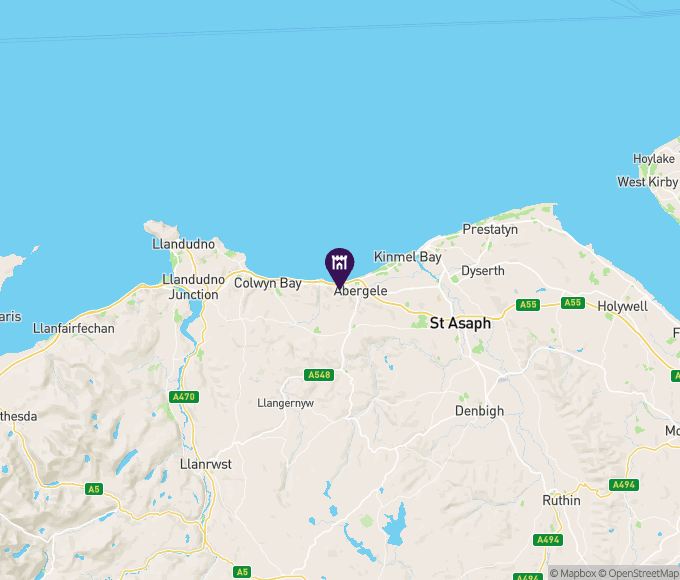
Gwrych Castle, perched near Abergele in Conwy County Borough, is a 19th-century Gothic revival masterpiece. Beyond its striking architecture, it’s famed for ghost stories, tragic history, and a lingering atmosphere of mystery. From aristocratic splendor to dereliction, this castle’s story is layered with human drama and paranormal intrigue.

Historical Background & Architecture

Gwrych Castle East Front

Built between 1810 and 1825 by Lloyd Hesketh Bamford-Hesketh, Gwrych Castle is a Gothic revival country house with Grade I listed status. Its towers, battlements, and sprawling estate once represented wealth and status. Over the centuries, it has served as a noble residence, refugee shelter, visitor attraction, and more.

Uses Over Time: From Glory to Decline

  • Late 19th century: Home of the Dundonald family through marriage; lavish estate spanning thousands of acres.
  • World War II: Shelter for 200 Jewish refugee children (Kindertransport era).
  • Post-war: Public attraction, medieval-themed events, jousts, and even boxing training venues.
  • 1980s–2000s: Neglect, vandalism, and looting left it in derelict condition.
  • 2018–present: Purchased by Gwrych Castle Preservation Trust; ongoing restoration and conservation efforts.

Haunted Reputation & Ghost Stories

Gwrych Castle is considered one of Wales’ most haunted estates. Visitors and staff report numerous paranormal phenomena and apparitions that contribute to its eerie fame.

Notable Ghosts

  • The White Lady: Thought to be Countess Winifred Cochrane; seen wandering halls in a white dress, sometimes accompanied by sobbing sounds.
  • The Lady in Red: A young woman who allegedly died tragically; appears dancing in the empty ballroom.
  • The Grey Lady: A servant or maid who met an untimely death; seen in gardens or corridors.
  • Staff/Servants’ Apparitions: Footsteps, slamming doors, and cold spots reported by castle workers over decades.

Paranormal Phenomena Reported

  • Disembodied footsteps and doors slamming in empty corridors.
  • Sudden temperature drops and cold spots.
  • Orbs, misty lights, and shadowy figures visible in photos.
  • Emotional sensations: feeling watched, melancholy, or oppressive atmosphere in certain rooms.

Modern Revival & Cultural Significance

Gwrych Castle Restoration Map

The Gwrych Castle Preservation Trust has spearheaded restoration efforts, stabilizing the structure and opening certain areas to visitors. Media exposure, including the filming of I’m a Celebrity… Get Me Out of Here!, has boosted funding and public interest.

Visiting Tips

  • Access is limited; some areas remain unsafe due to dereliction.
  • Respect the site’s fragile structure and its history, including its role as a wartime refugee shelter.
  • Ghost hunters and photography enthusiasts will find plenty of atmospheric corners — but always prioritize safety.

Why Gwrych Castle Captures Our Imagination

  • Layers of history: aristocracy, war-time refuge, public attraction, dereliction, and restoration.
  • Diverse ghost stories offering multiple storytelling angles — from aristocrats to servants.
  • Combination of architecture, tragic history, and paranormal lore makes it ideal for articles, tours, or dark tourism features.
  • A modern redemption arc thanks to the preservation trust and media exposure.

Gwrych Castle stands as a testament to history, mystery, and resilience. Its crumbling walls whisper tales of human triumph and tragedy, inviting visitors to explore both the past and the paranormal.

“`


Image from wikimedia.org – CC Licence: https://creativecommons.org/licenses/by-sa/4.0/deed.en

Hidden villages in North Wales

0


The Hidden Villages of North Wales


The Hidden Villages of North Wales: Discover the Country’s Best-Kept Secrets

“`

North Wales is often celebrated for Snowdon, Llandudno, and the bustling coastlines, but the region is also home to charming villages that remain off the typical tourist radar. These hidden gems offer history, stunning scenery, and an authentic taste of Welsh culture. Join us on a journey to explore five villages you absolutely must see.

1. Aberdaron

Aberdaron Coast

Located at the far tip of the Llŷn Peninsula, Aberdaron is a tiny coastal village famous for its peaceful beaches, ancient chapels, and dramatic coastal walks. It’s an ideal spot for stargazing or simply soaking up the rugged beauty of North Wales.

2. Llanfihangel-y-Pennant

Llanfihangel-y-Pennant

Tucked away in the Cadair Idris area, Llanfihangel-y-Pennant offers stunning scenery with historic ruins and lush valleys. This village is perfect for hikers and photography enthusiasts seeking tranquility away from the main tourist trails.

3. Beddgelert

Beddgelert Village

Steeped in Welsh folklore, Beddgelert is famed for the legend of Gelert, the faithful dog. Outside of peak tourist season, the village’s cobbled streets and serene river views make it an enchanting escape with a strong sense of history.

4. Llanrwst

Llanrwst Town Bridge

Llanrwst is a quaint market town in the Conwy Valley, featuring medieval bridges, artisan shops, and a vibrant local community. It’s a wonderful place to discover handmade crafts and taste traditional Welsh treats.

5. Local Flavors

No visit to hidden North Wales is complete without sampling local cuisine. Try traditional bara brith, locally produced cheeses, and Welsh ciders or ales. Small cafes and village bakeries provide an authentic taste of regional flavors that you won’t find in tourist hotspots.

Travel Tip:

Plan your visit outside peak season to enjoy quieter streets, take scenic walks without the crowds, and immerse yourself fully in the village atmosphere.

Why Visit These Villages?

  • Experience authentic Welsh culture and traditions.
  • Enjoy breathtaking landscapes and historic landmarks.
  • Support small businesses and local artisans.
  • Escape the tourist crowds for a peaceful, immersive experience.

North Wales’ hidden villages are a testament to the region’s charm and resilience. From coastal beauty to mountain landscapes and historic streets, these villages invite you to explore, photograph, and create unforgettable memories. Don’t just visit Wales — discover its hidden heart.

Author’s Note: All images are for illustrative purposes. Always check local visitor guidelines before planning your trip.

“`


cic

0

Station Partners

We believe in “Radio for Good.” radio.wales actively seeks to partner with other independent stations across Wales that share our CIC status. By collaborating, we amplify the reach of local voices and share vital technical and editorial resources.

Together, we create a resilient national network where grassroots broadcasters can support one another in delivering social value.

Network Stream

Experience the diversity of Welsh broadcasting. Our central hub allows listeners to toggle between national updates and hyperlocal content from our CIC partners. We act as the digital bridge for the entire Welsh community radio ecosystem.

Collective Impact

Partnering with radio.wales means more than just a broadcast slot. It’s about joining a collective of social enterprises dedicated to community wealth building. We help independent stations leverage their social impact to secure funding and grants.

Join our movement to turn hyperlocal radio into a national force for positive change across the country.

network.wales

The primary digital hub for professional growth across Wales. We connect businesses, sole traders, and startups into one cohesive national community. Our platform simplifies regional collaboration and keeps the Welsh economy moving forward together.

Discover local suppliers, share expertise, and find new partners from the North Coast to the Southern Valleys.

radio.wales

The heartbeat of Welsh audio. We champion hyperlocal radio to ensure every community has a voice. Our mission is to fill the “radio deserts” by supporting new grassroots stations while amplifying the reach of our existing local broadcasters.

CIC Collective

A dedicated space for Community Interest Companies to thrive. We invite Welsh CICs to join our network to share resources, increase social impact, and access our radio platform. Together, we move from isolated efforts to a powerful national movement.

Join the collective to trade social value, find collaborative funding, and amplify your community mission.

Network Wales
Skip to toolbar